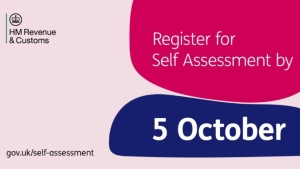
If you run an unincorporated business, either as a sole trader or in partnership, the way in which your profits are assessed has changed. For 2024/25 and later tax years, you are taxed on the profits for the tax year (i.e. those for the period from 6 April to the following 5 April) regardless of the date to which you prepare your accounts. If your accounting period does not match the tax year, you will need to apportion the profits of two accounting periods to arrive at the profits for the tax year. This cannot be done until the accounts for the later period are available. For these purposes, an accounting date between 31 March and 4 April inclusive is deemed to correspond to the tax year.
To move to the tax year basis, the 2023/24 tax year was a transitional year. If your accounting period does not correspond to the tax year, more than 12 months’ worth of profits will be assessed for 2023/24. The profits for this year cover the period from the end of the accounting period assessed in the 2022/23 tax year to 5 April 2024, less any profits which have been taxed twice (either in the early years of your business or when you changed your accounting date) which have yet to be relieved.
To prevent an exceptionally high tax bill in 2023/24, the extra profits taxed in this year as a result of the change of basis are automatically spread over five tax years – 2023/24 to 2027/28 inclusive. This means that your bills will be higher in each of these years. However, you can elect for these extra profits to be assessed earlier where this is beneficial.
We can help you work out your transitional year profits and the impact on your tax bills going forward.
Contact us at enquiries@ardury.co.uk to discuss further.
Our Promise
Dury & Co - Big Firm Capability. Small Firm Personality.
"We are dedicated to providing our client with unwavering integrity, precision, and personalised financial solutions, ensuring their confidence in our commitment to excellence as trusted accountants."